Bite problems are more common than most patients think. Many people assume crooked teeth are only a cosmetic issue. In reality, how your teeth come together affects chewing, speech, jaw comfort, and long-term oral health.
Here is what matters most. Not all bite issues are the same. An open bite, under bite, and cross bite each have different causes and treatment approaches.
What Is a Bite Problem (Malocclusion)?
A bite problem, or malocclusion, refers to misalignment between the upper and lower teeth when the mouth is closed.
According to the National Institute of Dental and Craniofacial Research (NIDCR), malocclusion can range from mild alignment issues to severe jaw discrepancies that affect function.
(src: NIDCR – Malocclusion Overview)
Some cases are mainly cosmetic. Others affect daily functions like eating and speaking.
How Do You Know Which Bite Problem You Have?
Let’s break down the three common types patients ask about.
What Is an Open Bite?
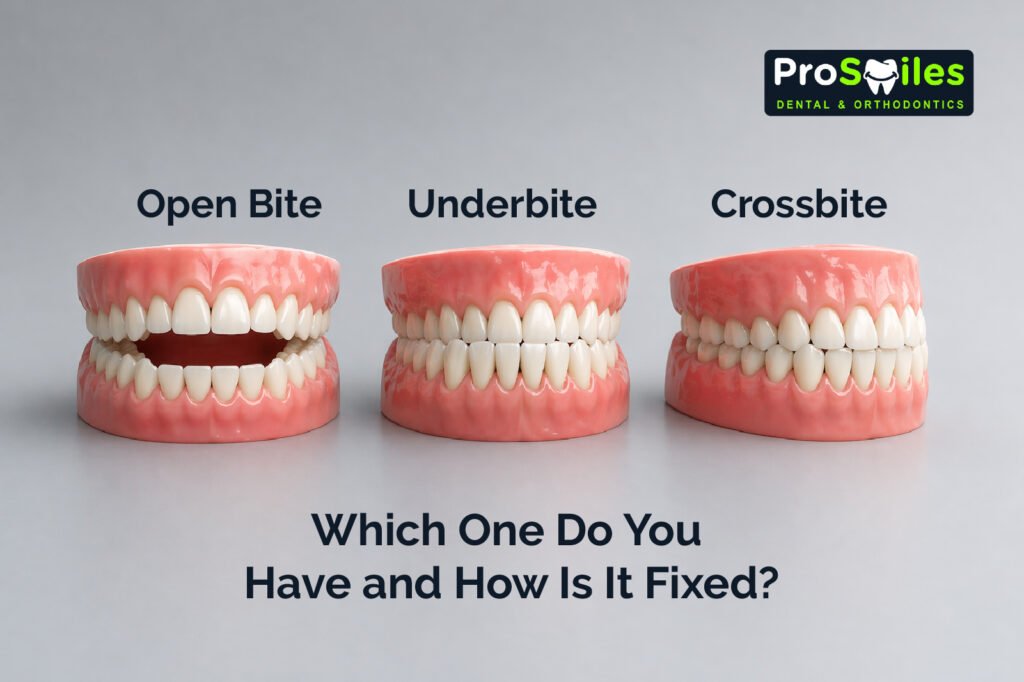
An open bite occurs when the upper and lower teeth do not touch when the mouth is closed.
This usually affects the front teeth.
Common signs:
- Visible gap between upper and lower front teeth
- Difficulty biting into foods like sandwiches
- Speech issues, especially with certain sounds
Causes:
- Thumb sucking in childhood
- Tongue thrusting (tongue pushing forward during swallowing)
- Jaw growth patterns
This is where patients often get confused. An open bite is not always about tooth position. It can also involve jaw development.
What Is an Under bite?
An under bite happens when the lower teeth sit in front of the upper teeth.
In more noticeable cases, the lower jaw appears prominent.
Common signs:
- Chin appears more forward
- Difficulty chewing properly
- Jaw strain or discomfort
Causes:
- Genetics
- Jaw size differences
- Childhood habits, though less common
Under bites can vary in severity. Mild cases may only affect a few teeth. Severe cases often involve the entire jaw.
What Is a Cross bite?
A cross bite occurs when some upper teeth sit inside the lower teeth instead of outside.
It can affect the front teeth, back teeth, or both.
Common signs:
- Teeth appear misaligned when biting down
- Uneven wear on teeth
- Jaw shifting to one side when closing
Causes:
- Delayed loss of baby teeth
- Narrow upper jaw
- Genetic factors
Most people overlook this step. A cross bite can cause gradual jaw imbalance if left untreated.
Why Do Bite Problems Need Treatment?
Not all bite issues require urgent correction, but ignoring them can lead to complications.
Possible effects include:
- Tooth wear and fractures
- Gum recession
- Jaw pain or TMJ disorders (temporomandibular joint issues)
- Difficulty chewing or speaking
The American Dental Association notes that proper alignment supports long-term oral health and function.
“Correcting malocclusion improves not only appearance but also oral function and overall health,” according to the American Dental Association.
How Are These Bite Problems Fixed?
Treatment depends on age, severity, and whether the issue involves teeth, jaws, or both.
1. Braces (Traditional Orthodontics)
Braces gradually move teeth into proper alignment.
Best for:
- Mild to moderate open bite
- Cross bite involving teeth
- Some under bite cases
Treatment time typically ranges from 12 to 24 months.
2. Clear Aligners (Invisalign and Similar Systems)
Clear aligners are removable trays that shift teeth over time.
Best for:
- Mild to moderate cases
- Adults or teens seeking a less visible option
This is where expectations matter. Aligners require consistent wear, usually 20 to 22 hours per day.
3. Palatal Expanders
Used mainly in children.
These devices widen the upper jaw to correct cross bite.
Why early treatment helps:
- Jaw bones are still developing
- Results are faster and more stable.
4. Tooth Extraction
In some cases, removing one or more teeth creates space for proper alignment.
This is considered when crowding is severe.
5. Jaw Surgery (Orthognathic Surgery)
For severe under bite or skeletal open bite, surgery may be required.
- Repositions the jaw
- Combined with orthodontic treatment
According to Mayo Clinic, jaw surgery is typically recommended when functional problems cannot be corrected with braces alone.
(src: Mayo Clinic – Jaw Surgery)
This is not the first option. It is reserved for advanced cases.
How Does Age Affect Treatment?
Age plays a major role in how bite problems are managed.
| Age Group | Treatment Approach |
| Children | Growth modification, expanders |
| Teens | Braces or aligners |
| Adults | Orthodontics, sometimes surgery |
Most people assume treatment is only for kids. Adults can still achieve good results, but treatment may take longer and may involve more complex planning.
What About Cost and Insurance?
Cost varies widely.
Factors include:
- Type of treatment
- Duration
- Need for surgery
- Geographic location
In the US:
- Braces: $3,000 to $7,000
- Clear aligners: similar range
- Jaw surgery: significantly higher
Insurance may cover part of orthodontic treatment, especially for functional issues rather than cosmetic ones.
Common Misconceptions About Bite Problems
- Myth: Bite issues are only cosmetic
Reality: They affect function and long-term oral health. - Myth: Braces fix all problems
Reality: Jaw-related issues may need surgery - Myth: Treatment is only for children
Reality: Adults can benefit as well
Final Thought
Bite problems are not just about how your smile looks. They affect how your teeth function every day. The earlier they are identified, the easier they are to manage.
At ProSmiles Dental, we approach bite correction with a clear plan based on each patient’s needs, age, and long-term goals. If you notice gaps, jaw shifts, or difficulty chewing, it is worth getting an evaluation. The right treatment at the right time can prevent more complex problems later and help you make confident decisions about your oral health.
FAQs
A dental exam with X-rays is the most accurate way. Visual signs can help, but diagnosis requires professional evaluation.
No. Most malocclusion do not improve without treatment.
Mild discomfort is common, especially after adjustments. It is usually manageable with over-the-counter pain relief.
It varies. Most orthodontic treatments take 12 to 24 months. Complex cases may take longer.
For mild to moderate cases, yes. Severe cases may still require braces or surgery.
Medically reviewed by Archana Lankupalli – Doctor of Dental Surgery