Patients ask this question almost every day. Some expect a clear winner. In reality, both electric and manual toothbrushes can work well when used correctly.
Here is what matters most. Technique, consistency, and timing matter more than the type of brush. But there are real differences that can affect results.
What Does the Research Say About Electric vs Manual Toothbrushes?
Clinical research gives us a useful starting point.
A widely cited review from the Cochrane Oral Health Group found that electric toothbrushes reduce plaque and gingivitis (gum inflammation) more effectively than manual brushes over time. Powered toothbrushes reduce plaque and gingivitis more than manual tooth brushing.
The American Dental Association (ADA) also states that both types are effective when used properly. So the answer is not absolute. It depends on how you brush. (src: ADA)
How Does an Electric Toothbrush Work?
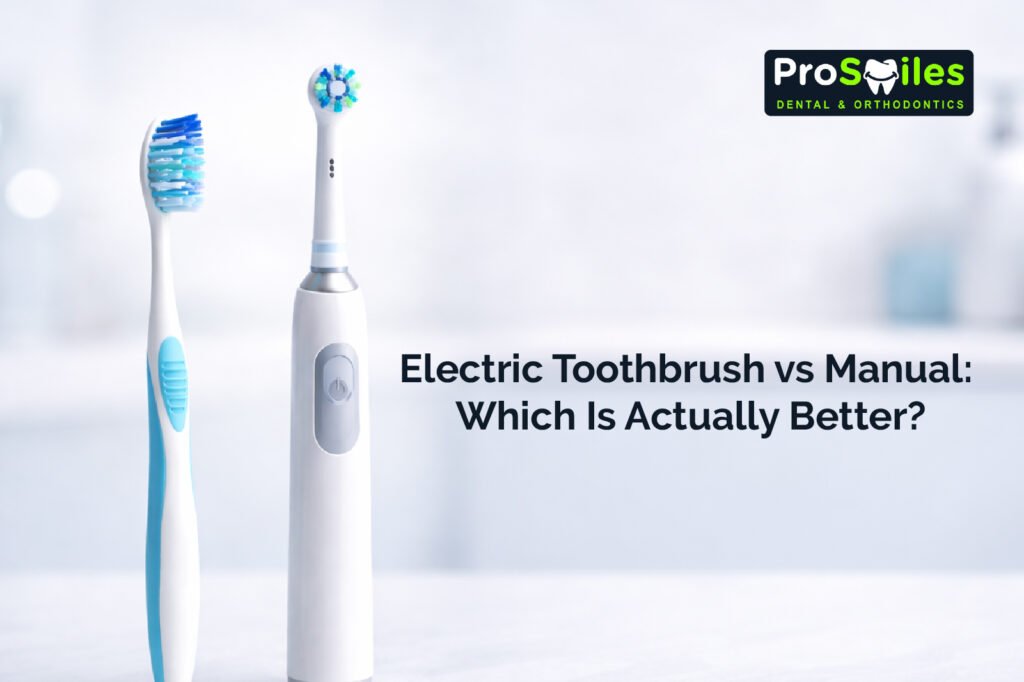
An electric toothbrush uses oscillating or vibrating movements to clean teeth.
Common features include:
- Rotating or sonic brush heads
- Built-in timers for 2 minutes
- Pressure sensors to prevent over-brushing
- Multiple cleaning modes
These features help patients maintain consistent technique.
Most people overlook this step. Brushing too hard or too fast reduces effectiveness.
What Are the Advantages of Electric Toothbrushes?
From a clinical standpoint, electric toothbrushes offer some clear benefits.
Key advantages:
- Better plaque removal
Especially along the gum line. - Built-in timers
Encourages brushing for the full recommended time - Ease of use
Helpful for children, elderly patients, or those with limited hand mobility - Consistent motion
Reduces technique errors
The National Institute of Dental and Craniofacial Researchemphasizes that plaque control is essential for preventing cavities and gum disease. (src: NIDCR)
What Are the Downsides of Electric Toothbrushes?
There are trade-offs that patients should consider.
- Higher cost upfront
- Replacement brush heads add ongoing expense
- Requires charging or batteries
- Not always necessary for patients with good technique
This is where expectations need to be realistic. An electric toothbrush is not a substitute for proper brushing habits.
What Are the Benefits of Manual Toothbrushes?
Manual toothbrushes remain widely used for good reason.
Advantages:
- Affordable and widely available
- Easy to travel with
- No charging required
- Effective when used with proper technique
The Mayo Clinic confirms that proper brushing technique is more important than the type of brush used.
Where Do Manual Toothbrushes Fall Short?
This is where patients often struggle.
- Inconsistent brushing technique
- Brushing too hard, which can damage gums
- Not brushing long enough
- Difficulty reaching back teeth
These issues are common in both adults and children.
Electric vs Manual Toothbrush: Side-by-Side Comparison
| Feature | Electric Toothbrush | Manual Toothbrush |
| Plaque removal | Generally better | Depends on technique |
| Cost | Higher | Low |
| Ease of use | Easier for most users | Requires proper technique |
| Portability | Less convenient | Very convenient |
| Maintenance | Needs charging and replacement heads | Simple replacement |
Which Toothbrush Is Better for Specific Patients?
This is where individualized care matters.
Electric toothbrush may be better for:
- Patients with braces or dental appliances
- People with arthritis or limited dexterity
- Children learning proper brushing habits
- Patients with gum disease
Manual toothbrush may be sufficient for:
- Patients with good brushing technique
- Those on a budget
- People who travel frequently
There is no one-size-fits-all answer.
What Do Patients Often Get Wrong?
We see a few common misconceptions.
“Electric toothbrushes clean automatically”
They help, but you still need to guide the brush properly.
“Manual brushes are ineffective”
Not true. With correct technique, they work well.
“Brushing harder means cleaner teeth”
This can damage enamel and gums.
“Expensive brushes guarantee better oral health”
Habits matter more than cost.
What Is the Correct Brushing Technique?
No matter which toothbrush you use, technique is critical.
The ADA recommends:
- Brush twice a day
- Use fluoride toothpaste
- Brush for at least 2 minutes.
- Hold the brush at a 45-degree angle to the gums.
This is where many patients fall short. They rush through brushing or apply too much pressure.
How Does Cost Factor Into the Decision?
Cost is a practical concern for many patients.
- Manual toothbrush: $2 to $5
- Electric toothbrush: $30 to $200+
- Replacement heads: $10 to $30 every few months
Over time, electric toothbrushes cost more. But they may reduce dental treatment costs if they improve oral hygiene.
This depends on consistency and usage.
Final Word
The best toothbrush is the one you will use correctly, twice a day, every day. That is the real deciding factor.
At ProSmiles Dental, we help patients choose tools that fit their routine, not just trends. With the right guidance and consistent care, you can maintain strong oral health regardless of the type of toothbrush you use.
FAQs
Often, yes for plaque control. But both work well with proper technique.
Yes, if you use the correct technique and brush for the full duration.
Yes. Many models include pressure sensors to prevent damage.
Every 3 to 4 months, or sooner if bristles are worn.
For many patients, especially those with technique issues, it can be a worthwhile investment.