Gum disease does not start with pain. That is why many patients miss it in the early stage. By the time discomfort shows up, the condition has often progressed.
Here is what matters most. Gum disease, also called periodontal disease, begins quietly with inflammation of the gums. If ignored, it can lead to bone loss and tooth loss.
According to the Centers for Disease Control and Prevention (CDC), nearly half of adults over 30 in the United States have some form of gum disease.
(src: CDC – Periodontal Disease Data)
What Is Gum Disease?
Gum disease is a bacterial infection of the tissues that support your teeth.
It develops in stages:
- Gingivitis: Early stage. Gums are inflamed but bone is not affected.
- Periodontitis: Advanced stage. Infection spreads deeper, damaging bone and connective tissue.
This is where patients often get confused. Gingivitis is reversible. Periodontitis is not fully reversible, only manageable.
What Are the Early Warning Signs of Gum Disease?
Early signs are subtle. They are easy to ignore because they do not always cause pain.
1. Bleeding Gums While Brushing or Flossing
Healthy gums do not bleed easily.
If you notice blood in the sink, especially during routine brushing, it is often the first sign of gingivitis.
Most people assume they are brushing too hard. In reality, bleeding is more often linked to inflammation caused by plaque buildup.
“Bleeding gums are a common early sign of periodontal disease and should not be ignored,” notes the American Dental Association.
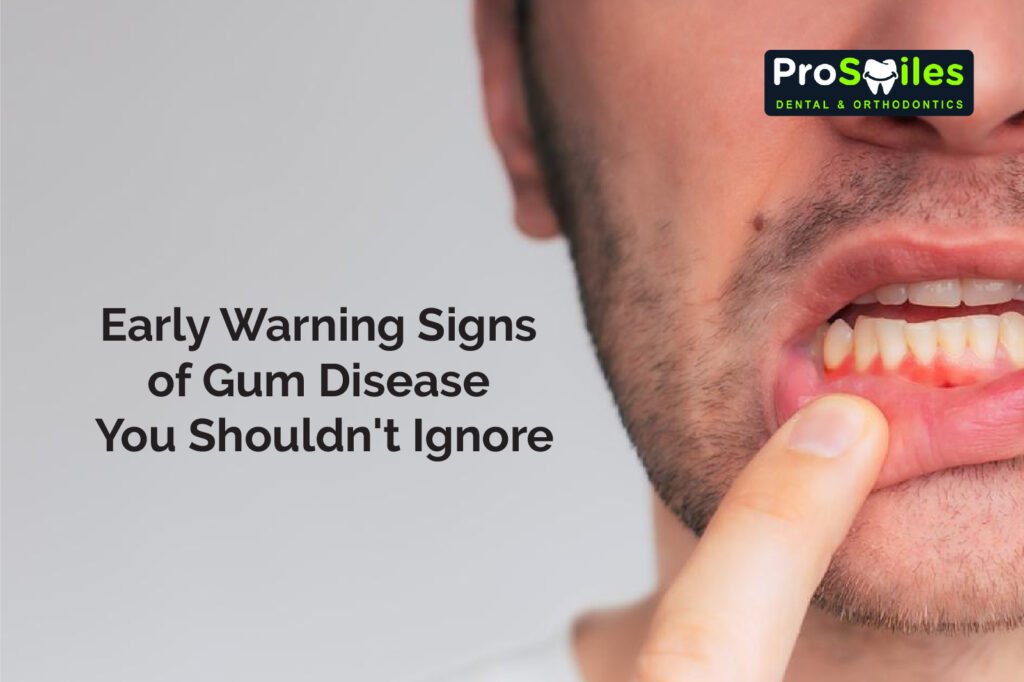
2. Red, Swollen, or Tender Gums
Normal gums are pale pink and firm.
Early gum disease causes:
- Redness
- Puffiness
- Mild tenderness
This inflammation is your body’s response to bacterial plaque.
3. Persistent Bad Breath
Bad breath, or halitosis, is not always due to food.
When bacteria accumulate below the gum line, they release toxins that cause a constant unpleasant odor.
If mouthwash only masks the smell temporarily, it is worth evaluating your gum health.
4. Gum Recession
Gums should fit snugly around teeth.
If your teeth look longer than before, your gums may be receding.
This can expose tooth roots, leading to sensitivity and higher risk of decay.
Most people overlook this step. Gum recession is often gradual, so changes are easy to miss.
5. Tooth Sensitivity
Sensitivity to hot, cold, or sweet foods can signal early gum problems.
As gums pull away, the root surface becomes exposed. This area lacks enamel, making it more sensitive.
Not all sensitivity is due to cavities. Gum health plays a role.
6. Changes in Bite or Tooth Alignment
In early stages, this is less common but still possible.
If teeth start shifting slightly or your bite feels different, it may indicate underlying gum support issues.
This is more often seen as the disease progresses, but early changes can occur.
Why Do These Signs Occur?
Gum disease starts with plaque, a sticky film of bacteria.
If not removed through brushing and flossing, plaque hardens into tartar (calculus). This cannot be removed at home.
Bacteria release toxins that irritate the gums. The immune system responds, causing inflammation.
Over time:
- Gums pull away from teeth
- Pockets form between teeth and gums
- Bone loss may begin
According to the National Institute of Dental and Craniofacial Research (NIDCR), untreated gum disease is a leading cause of tooth loss in adults.
(src: NIDCR – Gum Disease Overview)
Who Is at Higher Risk for Gum Disease?
Not everyone develops gum disease at the same rate.
Risk increases with:
- Poor oral hygiene
- Smoking or tobacco use
- Diabetes
- Hormonal changes, especially during pregnancy
- Certain medications that reduce saliva
- Age, especially over 40
This is where outcomes vary. A patient with controlled diabetes and good oral care may manage gum health well. Poorly controlled diabetes increases risk significantly.
How Is Early Gum Disease Treated?
Early gum disease is manageable and often reversible.
Treatment usually includes:
- Professional dental cleaning
- Improved brushing and flossing routine
- Antibacterial mouth rinses
In some cases, deeper cleaning called scaling and root planing may be needed.
| Stage | Treatment Approach |
| Gingivitis | Cleaning and improved oral care |
| Early Periodontitis | Deep cleaning, monitoring |
| Advanced Periodontitis | Surgical options, long-term management |
Most people think treatment is complex. In reality, early intervention is simple and cost-effective.
What Happens If You Ignore Early Signs?
Ignoring gum disease leads to progression.
Possible outcomes include:
- Gum recession
- Tooth mobility
- Bone loss
- Tooth loss
There is also growing evidence linking gum disease to systemic health issues like heart disease and diabetes complications.
(src: Mayo Clinic – Gum Disease and Health Risks)
How Can You Prevent Gum Disease?
Prevention is practical and consistent. For a complete guide, explore these ways to keep your teeth and gums healthy for life
- Brush twice daily with fluoride toothpaste
- Floss daily to remove plaque between teeth
- Visit your dentist regularly for cleanings
- Avoid tobacco products
- Manage underlying conditions like diabetes
Here is a simple rule. If plaque stays, inflammation follows.
Final Thought
Gum disease is one of the most preventable oral health conditions, yet it remains one of the most overlooked. The early signs are easy to miss, but they are also easy to act on.
At ProSmiles Dental, we focus on early detection and practical care that fits real patient routines. If you notice bleeding gums, sensitivity, or changes in your gum line, it is worth getting it checked. Taking action early makes treatment simpler, less costly, and far more effective.
FAQs
No. Early gum disease can improve with proper care, but it does not resolve without intervention.
Most of the time, yes. Occasional bleeding can happen, but frequent bleeding needs evaluation.
It varies. Some patients see slow progression, while others develop advanced disease within a few years.
Gingivitis is reversible. Periodontitis is not fully reversible but can be controlled.
Not in the early stages. That is why it is often missed.
Medically reviewed by Archana Lankupalli – Doctor of Dental Surgery