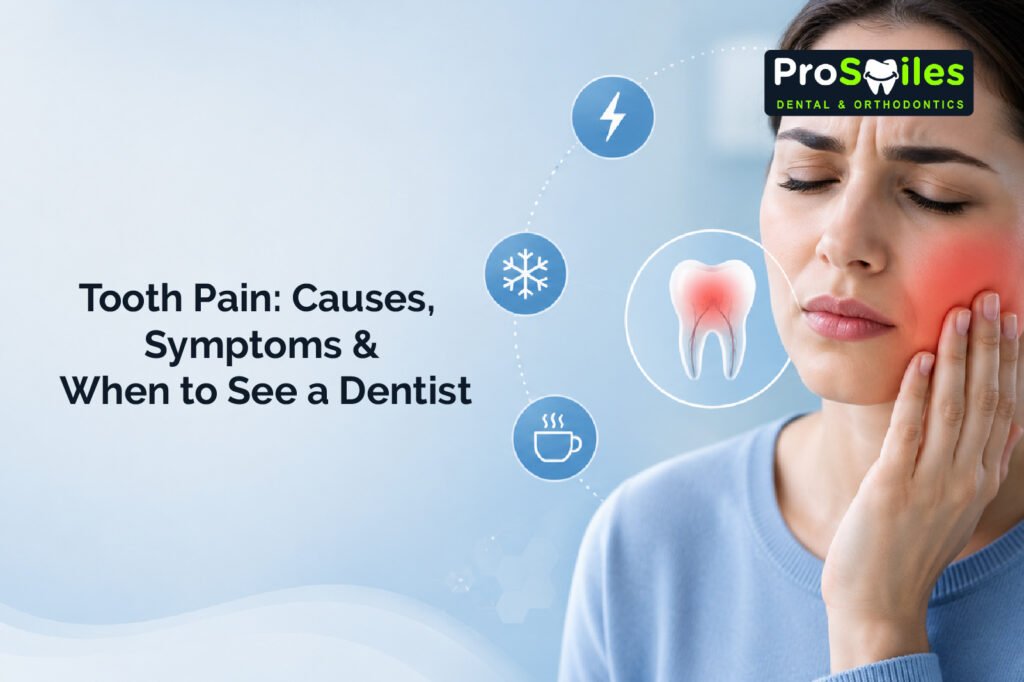
Tooth pain is one of the most common reasons people schedule a dental appointment. Sometimes it starts as mild sensitivity. Other times, it appears suddenly and becomes difficult to ignore.
Here is what matters most. Tooth pain is not a condition by itself. It is a symptom. The cause can range from a simple cavity to a serious dental infection that requires urgent treatment.
Ignoring dental pain often leads to more complicated and expensive procedures later.
What Causes Tooth Pain?
Tooth pain can develop for many reasons. Some causes are minor and temporary. Others affect the deeper structures of the tooth, including the nerve and surrounding bone.
Common Causes of Tooth Pain
| Cause | What Happens |
| Tooth decay (cavities) | Bacteria damage enamel and dentin |
| Gum disease | Inflammation affects gums and tooth support. |
| Cracked tooth | Tiny fractures expose sensitive areas |
| Dental abscess | Infection develops near the root |
| Teeth grinding | Excess pressure wears enamel |
| Tooth sensitivity | Exposed dentin reacts to temperature |
| Wisdom teeth issues | Impacted teeth create pressure and pain. |
According to the National Institute of Dental and Craniofacial Research, untreated tooth decay remains one of the leading causes of dental pain worldwide.
What Does Tooth Pain Feel Like?
Pain varies depending on the cause.
Patients may experience:
- Sharp pain while chewing
- Throbbing toothache
- Sensitivity to hot or cold foods
- Constant dull aching
- Pain that radiates to the jaw or ear
This is where patients often get confused. The location of pain does not always identify the exact tooth causing the problem.
For example, an infected molar may create pain that feels like it is coming from the jaw or nearby teeth.
When Is Tooth Pain a Dental Emergency?
Not every toothache requires emergency care, but some symptoms should never be ignored.
See a Dentist Quickly If You Have:
- Severe swelling in the gums or face
- Fever with tooth pain
- Pus or bad taste in the mouth
- Difficulty swallowing
- Persistent pain lasting more than two days
- A cracked or knocked-out tooth
Can a Toothache Go Away on Its Own?
Sometimes temporary irritation settles down, especially if caused by minor sensitivity or food trapped between teeth.
However, pain caused by:
- Cavities
- Infections
- Cracks
- Gum disease
usually does not resolve permanently without treatment.
The pain may decrease temporarily if the nerve inside the tooth dies, but the infection can continue spreading silently.
What Are the Symptoms of a Dental Infection?
A tooth infection, also called a dental abscess, often causes:
- Throbbing pain
- Swollen gums
- Facial swelling
- Sensitivity to pressure
- Fever
- Bad breath
This is one situation where delaying treatment becomes risky.
How Do Dentists Diagnose Tooth Pain?
Diagnosis involves more than looking at the tooth.
Dentists may use:
- Digital X-rays
- Bite testing
- Temperature sensitivity tests
- Gum measurements
The goal is to identify:
- Whether the nerve is affected
- If infection is present
- Whether surrounding bone is involved
This is where experience matters. Some tooth pain comes from sinus pressure, jaw joint problems, or grinding habits rather than the tooth itself.
How Is Tooth Pain Treated?
Treatment depends entirely on the underlying cause.
Common Treatments
| Problem | Possible Treatment |
| Cavity | Dental filling |
| Deep decay | Root canal therapy |
| Gum disease | Deep cleaning |
| Cracked tooth | Crown or restoration |
| Infection | Drainage, root canal, or extraction |
| Grinding damage | Night guard |
Most patients assume extraction is the only solution for severe pain. In many cases, root canal therapy can preserve the natural tooth.
What Can You Do at Home Before Seeing a Dentist?
Temporary relief measures may help reduce discomfort.
Helpful Steps
- Rinse with warm salt water.
- Use over-the-counter pain medication as directed
- Apply a cold compress for swelling
- Avoid very hot, cold, or sugary foods
Avoid:
- Placing aspirin directly on the gums
- Ignoring persistent swelling
- Using home remedies instead of professional care
This is where patients sometimes make the situation worse. Delaying evaluation often increases treatment complexity and cost.
Does Tooth Sensitivity Mean You Have a Cavity?
Not always.
Sensitivity can result from:
- Worn enamel
- Gum recession
- Teeth whitening products
- Grinding habits
However, sudden or worsening sensitivity should still be evaluated.
Especially if it occurs:
- While chewing
- Without obvious triggers
- In one specific tooth
How Can You Prevent Tooth Pain?
Preventive care remains the most effective strategy.
Daily habits matter more than most patients realize.
Prevention Tips
- Brush twice daily with fluoride toothpaste
- Floss once daily
- Limit sugary snacks and drinks
- Wear a night guard if you grind your teeth
- Schedule regular dental exams and cleanings
The Centers for Disease Control and Prevention emphasizes that preventive dental care significantly reduces the risk of tooth decay and gum disease. (Src: CDC)
Common Misconceptions About Tooth Pain
“If the pain stops, the problem is gone.”
Not necessarily. A dying nerve may stop hurting while infection continues underneath.
“Only cavities cause tooth pain.”
Gum disease, fractures, grinding, and infections can also trigger pain.
“Painkillers fix the issue.”
They only manage symptoms temporarily. They do not treat the cause.
Final Thought
Tooth pain is your body’s way of signaling that something needs attention. The earlier the cause is identified, the simpler and more predictable treatment usually becomes.
At ProSmiles Dental, we encourage patients not to wait until discomfort becomes severe. Even mild tooth pain can point to issues developing below the surface. A timely dental evaluation helps protect both oral health and overall well-being while allowing patients to make informed treatment decisions with confidence.
Frequently Asked Questions
Blood flow changes and lying flat can increase pressure around inflamed tissues.
Indirectly, yes. Stress often increases teeth grinding and jaw clenching.
Not always, but throbbing pain commonly suggests inflammation or infection.
If pain lasts more than one or two days, or worsens, schedule an evaluation promptly.
No. Early enamel weakening may be managed with fluoride, but established cavities require dental treatment.
Reviewed by Dr. Archana, Doctor of Dental Surgery, ProSmiles Dental