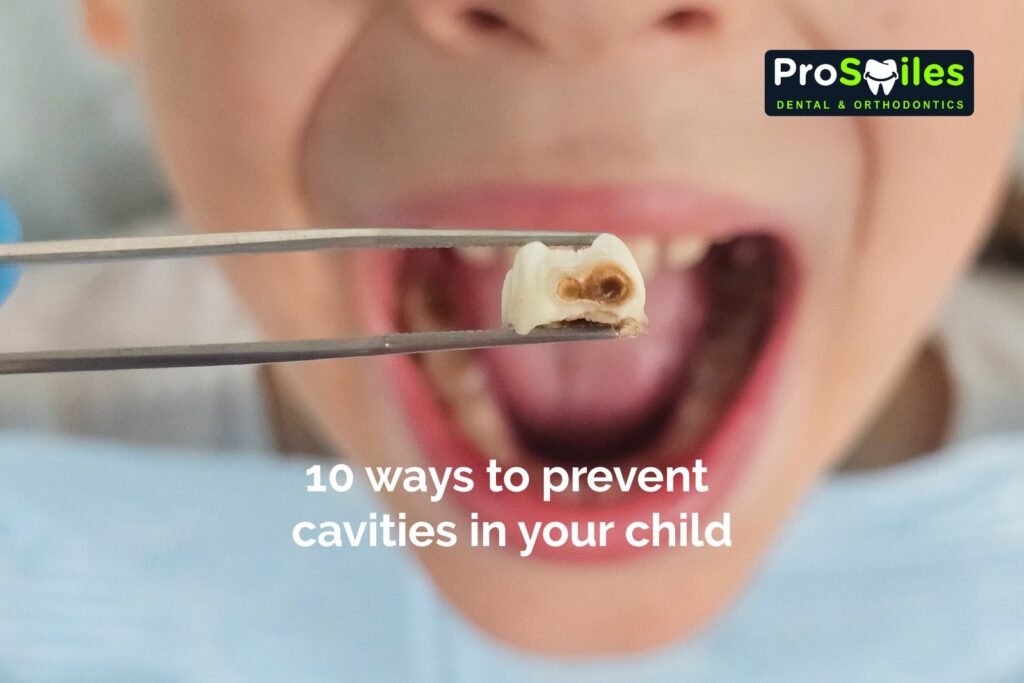
As parents, you want your child to grow up with a happy, confident smile. But cavities can get in the way. Tooth decay, also called dental caries, is one of the most common chronic diseases in children-more common than asthma-according to organizations like the American Dental Association (ADA).
The good news? Cavities are preventable.
With good habits at home and routine dental care, your child can have strong and healthy teeth. This blog will outline 10 effective and dentist-approved strategies to protect your child’s teeth from decay.
What Causes Cavities in Children?
Cavities are formed by bacteria in the mouth, which act upon the sugars and starches of food. Over time, these bacteria produce enough acids to break down tooth enamel. When cavities are left untreated, this may result in pain, infection, and even loss of the tooth.
Some common factors include:
- Poor oral hygiene
- Sugary snacks and drinks
- Lack of fluoride
- Not regularly visiting a dentist
- Genetic or enamel-related disorders
Now, let’s discuss prevention.
1. How does brushing your teeth twice a day prevent dental cavities?
It’s a well-known fact that brushing removes the plaque, that sticky layer of bacteria, before it damages teeth.
Make brushing a routine done twice a day for two minutes using a soft-bristled toothbrush.
Tips to make brushing effective:
- Use fluoride toothpaste appropriate for your child’s age.
- Angle the brush toward the gums.
- Brush with them until they develop proper hand coordination usually until age 6–7.
- Make brushing fun with timers, songs, or character brushes.
Fluoride toothpaste helps reinforce the enamel and prevents decay according to the CDC and ADA.
2. At what age should a child start flossing?
Children should start flossing when two of their teeth touch each other.
Flossing removes food stuck between teeth, areas that a toothbrush cannot reach. If one does not floss, then plaque between the teeth will continue to build up and eventually lead to cavities.
Child-friendly flossing options:
- Floss picks
- Waxed floss
- Flavoured kids’ floss
Try flossing together and make it a routine instead of a task.
3. Why Is Fluoride Important for Children’s Teeth?
Fluoride helps strengthen enamel and makes it more resistant to decay. It is one of the most trusted and researched dental care ingredients, approved by the ADA, WHO, and NHS.
Your child may get fluoride from:
- Fluoride toothpaste
- Fluoride varnish applied by the dentist
- Fluoridated drinking water, if in your area
A dentist will recommend the proper amount to prevent overuse.
4. Do Regular Dental Check-ups Really Make a Difference?
Yes-early dental visits help find problems before they become serious.
Children should visit the dentist every 6 months or as recommended.
During these regular check-ups, dentists:
- Look for cavities and early signs of decay in teeth.
- Provide fluoride treatments
- Offer sealants if necessary
- Educate parents and children about proper oral hygiene
Early dental care decreases the possibility of painful emergencies and future dental costs.
5. Why Are Dental Sealants Recommended for Children?
Dental sealants are thin, protective coverings applied to the chewing surfaces of back teeth, also known as molars. Molars are more susceptible because food particles tend to fall into the grooves.
Sealants:
- Prevent the settling of food and bacteria.
- Reduce cavity risk by up to 80% according to ADA research
They are painless, quick, and highly effective, especially for school-aged children.
6. Limiting Sugary Foods and Drinks: How Does This Help?
Sugar feeds the bad bacteria in the mouth. The more frequently your child consumes sugar, the longer the acid attacks last.
Foods to limit:
- Candies and gummies
- Soft drinks and energy drinks
- Ice creams, chocolates, sweetened milk.
- Processed snacks include cookies and biscuits.
Instead, offer:
- Nuts
- Cheese
- Fruits
- Vegetables
- Whole grains
Remember: it’s not just how much sugar they eat, but how often.
7. Is Water the Best Drink for Children?
Yeah, because water clears off the food particles and keeps the saliva quantity normal. Saliva neutralizes acids and repairs slight enamel damages.
Encourage children to drink water after meals, and especially after sweet snacks.
Tip: If your child drinks juice, offer it at mealtimes—not as a snack.
8. Can Healthy Snacking Habits Reduce Cavities?
Yes–smart snacking can significantly reduce the risk of tooth decay.
Choose:
- Fruits, which are rich in fiber
- Yogurt
- Cheese sticks
- Carrot or cucumber sticks
Avoid:
- Sticky snacks: caramel or dried fruits. They tend to stick to teeth longer.
- Frequent grazing throughout the day
Try to stick to scheduled meal and snack times
9. Can Parents Influence Dental Hygiene Positively?
Children learn best from what they see consistently. If they see and watch you brushing, flossing, and taking good care of your teeth, they are likely to follow suit.
Make oral care fun by:
- Brushing together
- Using child-friendly dental products
- Reward consistent behaviour, not sweets-use stickers or praise
Building positive associations early makes habits lifelong.
10. Why is early dental education important?
Kids who comprehend why dental health matters tend to make better choices.
Explain in simple terms:
- Sugar feeds germs
- Brushing removes germs
- Visiting the dentist keeps their smile healthy.
Books, cartoons, and stories can reinforce learning. Some famous resources on dentistry, approved and recommended by pediatric experts, may help in making the learning process enjoyable.
Bonus Tip: Mouthguards for Active Kids
If your child plays contact sports, consider a custom-fit mouthguard. The American Academy of Pediatric Dentistry recommends them to prevent a number of injuries, fractures, and traumas to teeth.
Signs Your Child May Have a Cavity
Seek dental care if you notice:
- Pain or sensitivity in the tooth
- White or brown spots on the teeth
- Avoid chewing on one side
- Bad breath, even after brushing
Early treatment will prevent serious problems.
Final Thoughts: Protect Your Child’s Smile
Cavity prevention isn’t complicated—it just requires consistency, awareness, and support. With the right diet, daily habits, and dental care, children can enjoy healthy teeth and confident smiles.
If you’re unsure where to start, or if you think your child may already have a cavity, scheduling a check-up is the best next step. At ProSmiles Dental, our pediatric dental team provides gentle, safe, and child-friendly care focused on comfort and long-term oral health.