
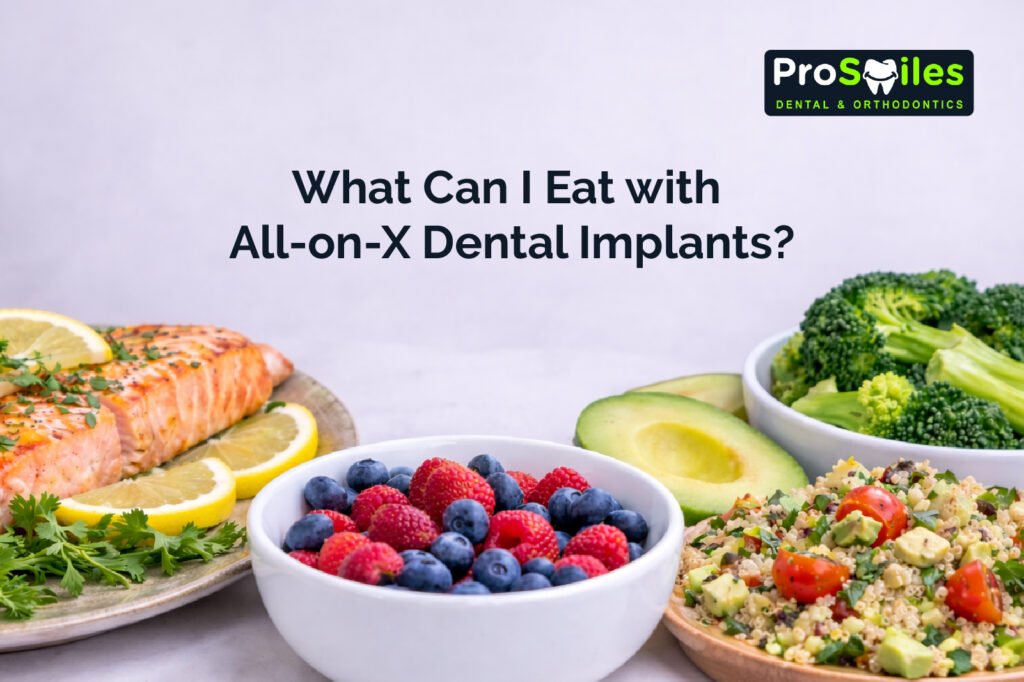
All-on-X dental implants are designed to restore a full arch of teeth using strategically placed implants. They are stable, fixed, and far more secure than traditional dentures. Patients often ask the same question after surgery: What can I eat now?
Here is what matters most. Your diet after All-on-X implant surgery directly affects healing, implant stability, and long-term success.
What Should I Eat Immediately After All-on-X Surgery?
The first few days are critical. Your gums are healing, and the implants are beginning the process of osseointegration. This is when the jawbone bonds to the titanium implant posts.
During the first 3 to 5 days, stick to liquids and very soft foods:
- Smooth soups, lukewarm
- Protein shakes
- Greek yogurt
- Applesauce
- Pudding
- Mashed avocado
- Scrambled eggs
Avoid:
- Hot foods
- Crunchy snacks
- Sticky candy
- Spicy meals
- Drinking through a straw
Suction from straws can disturb healing tissue. This is a common oversight.
Pain is usually manageable with prescribed medication. If discomfort increases instead of improving, contact your dental provider.
Why Is a Soft Diet Necessary After All-on-X Implants?
Many patients feel their temporary teeth are strong enough to chew normally. This is where patients often get confused.
Even if your All-on-X prosthesis feels secure, the bone is still healing. Excessive pressure can create micro-movement around implants. That can delay integration or compromise stability.
As per reports, implant success rates above 95 percent in healthy individuals, but proper post-surgical care is a major factor.
A soft food diet reduces stress on implants while your bone heals.
What Can I Eat During the 4 to 6 Week Healing Phase?
For most patients, a soft diet continues for about one month. Healing time varies based on age, smoking status, diabetes, and bone quality.
Safe soft foods include:
- Oatmeal
- Mashed potatoes
- Soft pasta
- Cottage cheese
- Soft fish
- Well-cooked vegetables
- Ripe bananas
- Rice
Cut food into small pieces. Chew slowly. Spread pressure evenly across both sides.
Avoid:
- Raw vegetables
- Nuts
- Popcorn
- Tough meats
- Hard bread crust
Most people overlook this step. Even small habits like chewing ice can damage temporary prosthetics.
When Can I Return to Normal Eating?
Full bone integration usually takes 3 to 6 months. Your dentist will confirm healing with clinical evaluation and imaging before clearing you for harder foods.
After full healing, most patients with All-on-X dental implants can e njoy:
- Chicken and turkey
- Fish
- Cooked vegetables
- Soft fruits
- Sandwiches
- Rice and grains
However, some caution remains wise. Very hard foods like ice, hard candy, and uncut apples can cause damage over time.
The Mayo Clinic notes that long-term implant success depends on good oral hygiene and avoiding habits that stress implants.
Does Nutrition Affect Implant Healing?
Yes. Healing requires protein and essential nutrients.
Focus on:
- Lean protein
- Vitamin C for tissue repair
- Vitamin D for bone health
- Calcium-rich foods
Patients with diabetes or osteoporosis may heal more slowly. Smoking also reduces blood flow and increases complication risk.
The World Health Organization emphasizes that proper nutrition supports wound healing and immune response.
If you are unsure about dietary balance, discuss it with your dentist or primary physician.
Practical Eating Tips for All-on-X Patients
Here are strategies we routinely recommend:
- Take small bites
- Chew evenly on both sides
- Avoid biting directly into hard foods
- Maintain hydration
- Keep follow-up appointments
Cleaning is essential. Food particles can accumulate around the prosthesis. Use a soft toothbrush and water flosser if recommended.
Cost is another concern patients mention. All-on-X dental implants are an investment. Protecting them through proper diet reduces the risk of repair costs later.
At ProSmiles Dental, we guide patients through every stage of recovery with clear dietary instructions, healing evaluations, and long-term maintenance planning. If you are considering All-on-X dental implants or want personalized guidance about your recovery diet, schedule a consultation. Making informed choices today protects your implants and your oral health for years to come.
Frequently Asked Questions
Eventually yes, but only after full healing. Cut it into small pieces and chew slowly.
Typically 4 to 6 weeks, depending on healing progress and your dentist’s recommendation.
Yes, but avoid very hot beverages during the first few days.
Yes. They are fixed in the bone, which provides better stability and chewing efficiency.
You risk implant instability or delayed osseointegration.