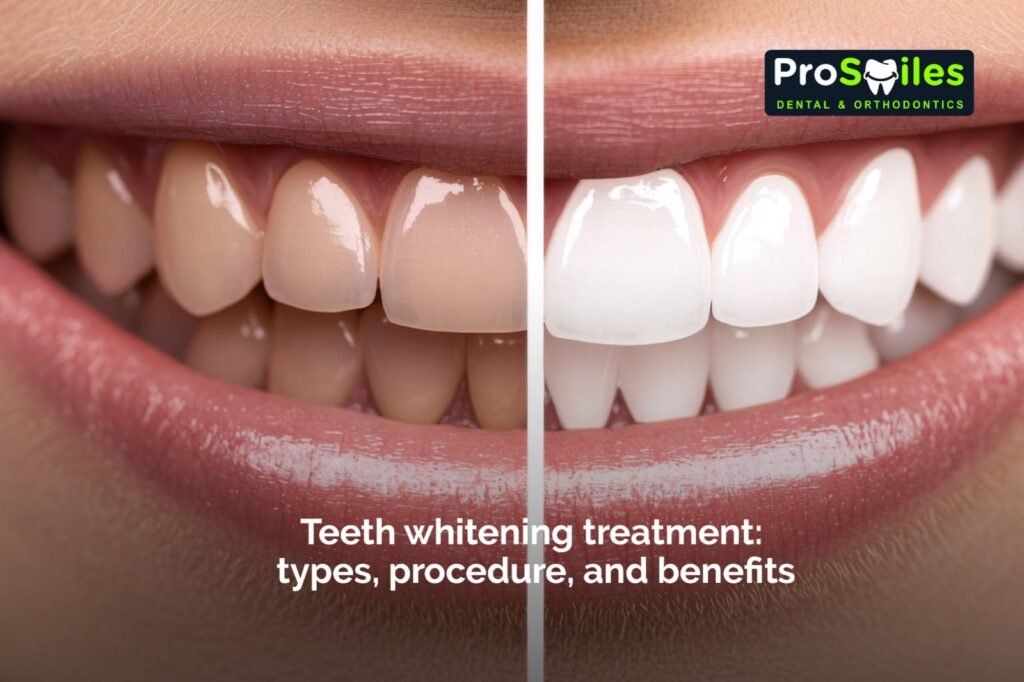
Teeth whitening is one of the most frequently discussed topics in dental clinics across the country. It comes up during routine cleanings, emergency visits, and even conversations that start with a completely different concern.
A parent may ask about whitening before a family event. A working professional mentions coffee stains they cannot seem to remove. A senior patient wonders why their teeth look darker even though they brush regularly.
What most people want is not a dramatic change. They want their teeth to look cleaner, healthier, and closer to how they remember them.
What often stands in the way is confusion. Confusion about safety. About pain. About whether whitening damages enamel. About which option is real and which is marketing.
This page is designed to answer those questions calmly and clearly. It is not meant to replace a dental exam. It is meant to help you understand the landscape before deciding what deserves a closer look.
What is teeth whitening and how does it work?
Teeth whitening is a chemical process that lightens the color of natural tooth enamel.
It does not scrub teeth. It does not remove enamel. It works by breaking down stain molecules that sit within the enamel structure.
Enamel may feel solid, but it has microscopic pores. Over time, pigments from food, drinks, tobacco, and certain medications settle into these pores. That is why brushing alone often does not change tooth color.
Whitening agents release oxygen molecules. These molecules interact with stain compounds and break them apart into smaller, less visible pieces.
This is where many patients get confused. Whitening does not create a new tooth color. It restores brightness by reducing stain buildup.
If you are wondering why brushing twice a day still leaves teeth looking yellow, this is explained in more detail here: Why are my teeth yellow when l brush them every day?
According to the American Dental Association, peroxide-based whitening is considered safe for most adults when used as directed and under professional supervision.
Why teeth become discolored over time
Discoloration rarely has a single cause.
Most patients experience a combination of surface stains and deeper color changes.
Surface stains come from everyday habits. Coffee, tea, red wine, soda, and tobacco are the most common contributors.
Deeper discoloration can result from aging. As enamel thins naturally, the yellowish dentin underneath becomes more visible. Certain medications and childhood illnesses can also affect tooth color.
Trauma is another overlooked factor. A tooth that darkens after injury may indicate nerve damage. Whitening will not correct this.
This is why evaluation matters before treatment.
Types of teeth whitening treatments
There are several whitening options available today. Each has a role. None are universal solutions.
Understanding these options helps prevent disappointment and unnecessary sensitivity.
In-office professional whitening
In-office whitening is performed at a dental clinic under controlled conditions.
The gums are protected. A concentrated whitening gel is applied. The process is monitored throughout the appointment.
Patients often choose this option when they want noticeable improvement in a short time. Appointments usually last about one hour.
Sensitivity can occur, especially in the first 24 to 48 hours. This is usually temporary.
This option works well for patients with surface stains and healthy enamel.
A detailed explanation of professional whitening, including candidacy and expected outcomes, is available here:Teeth Whitening Service
Take-home dentist-supervised whitening kits
These kits combine flexibility with safety.
Custom trays are fabricated to fit your teeth closely. This ensures even contact and reduces gum irritation.
Patients often prefer this option when schedules are unpredictable or when they want gradual improvement.
Results tend to look natural and balanced. Sensitivity is often easier to manage because treatment can be adjusted.
Over-the-counter whitening products
Store-bought whitening products include trays, strips, pens, and LED kits.
Some patients see mild improvement. Others see little to no change.
The main issue is lack of personalization. Generic trays rarely fit well. Overuse increases sensitivity risk. Results vary widely.
Whitening toothpaste and strips
Whitening toothpaste and strips focus on surface stains.
They do not change the intrinsic color of teeth.
They can be useful for maintaining results after professional whitening.
On their own, they rarely create dramatic change.
Teeth whitening procedure: What patients can expect
Fear of pain is one of the most common concerns we hear.
Most whitening treatments are not painful.
Temporary sensitivity may occur. This is more common in patients who already have sensitive teeth or exposed roots.
In-office treatments usually take about one hour. Take-home options require daily use over one to two weeks.
Before whitening, a dental exam is essential. Cavities, gum inflammation, or cracks must be addressed first.
This is where many people overlook an important step. Whitening does not treat dental disease.
Is teeth whitening safe?
When done correctly, whitening is considered safe for most adults.
Problems arise when whitening is done without evaluation or is overused.
Excessive use can increase sensitivity. It can irritate gums. It does not strengthen enamel.
The ADA recommends professional guidance to reduce risks and ensure appropriate use.
Benefits of teeth whitening beyond appearance
A brighter smile is the obvious benefit.
Less obvious benefits often come from behavioral changes.
Patients frequently report brushing more carefully. They floss more consistently. They reduce staining habits.
Whitening does not cause these changes. Awareness does.
Improved appearance often leads to better oral hygiene.
Who is a good candidate and who should be careful
Whitening works best on natural teeth with intact enamel.
Adults with surface stains are typically good candidates.
Whitening may not be appropriate if you have:
- Extensive crowns or veneers
- Severe tooth sensitivity
- Active gum disease
- Thin or worn enamel
- Pregnancy or breastfeeding
Whitening does not change the color of dental restorations. Planning matters.
Teeth whitening and existing dental work
Many people overlook this factor.
Fillings, crowns, and veneers do not respond to whitening agents.
This can lead to uneven color if whitening is done without planning.
A dental exam helps determine whether whitening alone will achieve the desired result.
Common misconceptions about teeth whitening
One common myth is that whitening permanently damages enamel.
When used appropriately, it does not.
Another myth is that natural remedies are safer. Lemon juice, charcoal, and baking soda can erode enamel.
Once enamel is lost, it cannot be replaced.
Public health guidelines consistently advise against unsupervised home remedies.
How long results last and what affects them
Whitening results vary.
Most patients maintain results for months to years with good care.
Factors that influence longevity include:
- Coffee, tea, wine, and soda
- Smoking or tobacco use
- Brushing and flossing habits
- Frequency of dental cleanings
- Grinding or clenching
Maintenance after whitening
Maintenance is often overlooked.
Using whitening toothpaste, avoiding excessive staining, and attending regular cleanings help extend results.
Occasional touch-up treatments may be recommended.
Professional whitening vs DIY options
Professional whitening offers supervision, predictability, and safety.
DIY options offer convenience and lower upfront cost.
Neither is wrong by default.
Risk increases when whitening is done without understanding oral health conditions.
Whitening for teens and older adults
Teens should only whiten under dental supervision.
Older adults may have thinner enamel or restorations that affect results.
Age alone does not determine candidacy. Oral health does.
When to see a dentist before whitening
Sudden discoloration should never be ignored.
Darkening may indicate decay, trauma, or nerve issues.
Bleeding gums or pain should be addressed first.
Whitening should never replace diagnosis.
A practical next step
If you are considering teeth whitening, begin with a conversation.
Discuss your goals during your next dental visit. Ask which options suit your teeth, habits, and lifestyle.
A short evaluation can prevent sensitivity, uneven results, and wasted effort.
At ProSmiles, we believe whitening should support long-term oral health, not compromise it. Clear information and proper guidance help patients make confident decisions.
Taking that first step thoughtfully often leads to better outcomes.