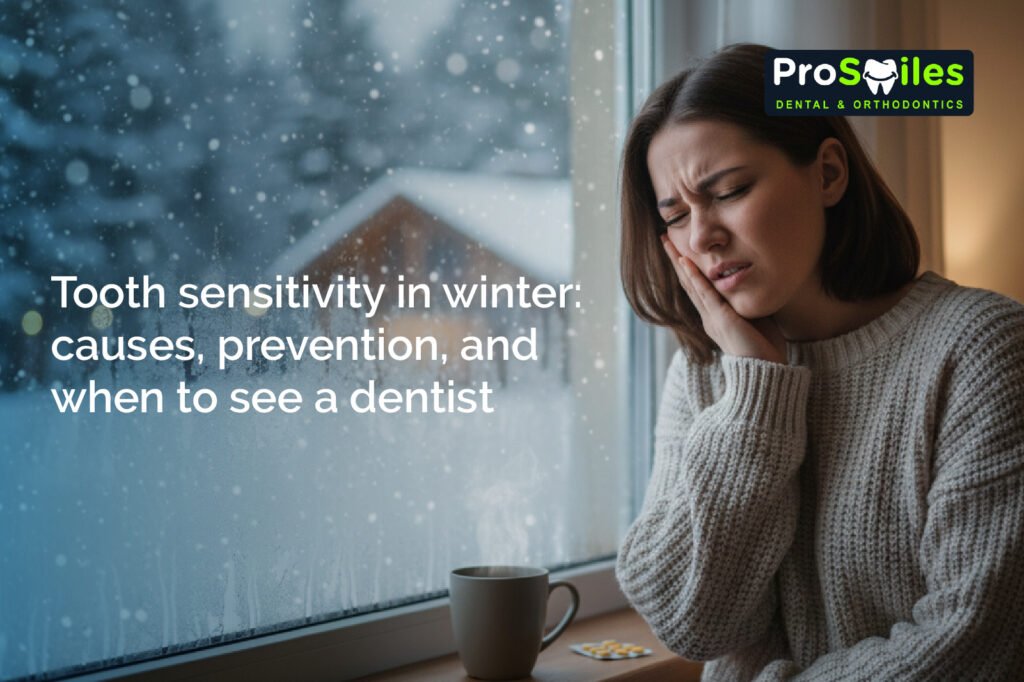
Winter can be a beautiful season. Cold air, cozy drinks, and holiday treats make it special. For many people, it also brings tooth sensitivity. That sudden twinge when sipping hot cocoa or breathing in crisp air is common. Understanding the causes, learning how to prevent it, and knowing when to see a dentist can make a real difference in comfort and oral health.
Why teeth become sensitive in winter
Here is what matters most: tooth sensitivity happens when the enamel that protects your teeth is worn down or when gums recede, exposing the softer dentin underneath. Cold temperatures, hot drinks, or even dry indoor air can trigger nerve endings, causing sharp, temporary pain.
Several factors can increase winter sensitivity. Teeth grinding, gum disease, cavities, and cracked teeth all contribute. Even brushing too hard or using a hard-bristled toothbrush can make teeth more prone to discomfort. Recognizing the cause helps guide the right approach for relief.
How diet and habits affect sensitivity
This is where patients often get confused: not all tooth pain comes from cold air. Your diet and habits have a major effect. Cold drinks, iced desserts, and acidic foods can irritate teeth, especially if enamel is already weakened. Citrus, sodas, and holiday sweets are common triggers.
Brushing technique also matters. Brushing too hard or using a hard-bristled brush wears enamel, while skipping flossing allows plaque buildup near the gum line. Both situations make teeth more vulnerable in winter. Small adjustments in daily routines can reduce discomfort significantly.
Preventing winter tooth sensitivity
Most people overlook this step: prevention is easier than treatment. Start with a soft-bristled toothbrush and gentle brushing in circular motions. Toothpaste designed for sensitive teeth helps block nerve pain over time.
Limit acidic or sugary foods, particularly cold or hot drinks. Rinse your mouth with water after meals to protect enamel. If you grind your teeth, wearing a properly fitted mouthguard at night can prevent additional wear. Small daily practices can make a big difference in comfort.
Managing discomfort at home
Winter sensitivity can often be managed at home with simple strategies. Avoid extremely hot or cold foods temporarily. Rinsing with warm salt water can ease minor gum irritation. Over-the-counter pain relievers may help if discomfort persists, but they are a temporary solution.
Here is what matters most: these steps provide relief but do not replace professional care. Persistent or worsening sensitivity often signals an underlying dental issue that needs attention. Addressing problems early prevents more serious complications.
When to see a dentist
You should see a dentist if sensitivity lasts more than a few weeks, occurs without triggers, or comes with swelling, bleeding, or pain when biting. These symptoms may indicate cavities, gum disease, or other dental conditions that require treatment.
Early evaluation can prevent minor sensitivity from becoming major problems. Dentists can offer treatments such as professional fluoride applications, desensitizing agents, sealants, or in some cases, restorative procedures. Proper care restores comfort and protects your teeth in the long term.
Planning for long-term dental health
Consistency is key. Regular dental visits allow your dentist to monitor enamel wear, gum health, and risk factors for sensitivity. Patients who address winter sensitivity early often avoid expensive or invasive procedures later.
Most people overlook this step: combining preventive care with professional guidance creates a foundation for long-term oral health. Simple habits such as brushing, flossing, and timely checkups reinforce comfort and protect against future problems.
Additional considerations for different age groups
Sensitivity may vary with age and oral health history. Children and teens may experience it due to developing enamel or braces. Adults may see it due to gum recession or enamel erosion. Seniors often face more complex issues like exposed root surfaces or dry mouth.
Here is where patients often get confused: the same symptom may have different causes depending on age and lifestyle. Tailoring care to individual needs ensures the most effective prevention and treatment strategies.
Lifestyle adjustments to reduce sensitivity
Environmental and lifestyle factors influence winter sensitivity. Dry indoor air can contribute to gum irritation, while diet changes over the holiday season may increase enamel wear. Simple adjustments such as using a humidifier, staying hydrated, and moderating sugary or acidic foods help protect teeth.
Protective measures like wearing a scarf over your mouth in extremely cold weather can reduce direct cold exposure. Maintaining consistent oral hygiene and monitoring sensitivity triggers ensures better comfort throughout the season.
Looking ahead to a healthy year
Winter tooth sensitivity is manageable with the right approach. Identifying triggers, practicing preventive care, and consulting a dentist when necessary create a strong foundation for comfort and oral health all year. Patients who take these steps early are less likely to experience severe pain or complications later.
At ProSmiles Dental, we encourage our patients to address seasonal sensitivity proactively. Simple preventive actions combined with professional evaluation help maintain healthy teeth, prevent discomfort, and build confidence in daily life.