A sudden, throbbing toothache can stop anyone in their tracks. When that pain doesn’t go away and your dentist says you need a root canal, one of the first questions that might come to mind is:
“How much does a root canal cost, especially if I don’t have dental insurance?”
If you’re wondering the same thing, you’re not alone. Understanding the costs involved helps you plan ahead, avoid surprises, and make informed decisions about your oral health. In this guide, we’ll break down the average root canal cost without insurance, explain what affects the price, and share some practical tips to make the treatment more affordable.
Why You Might Need a Root Canal
Before diving into costs, let’s quickly understand what a root canal actually is.
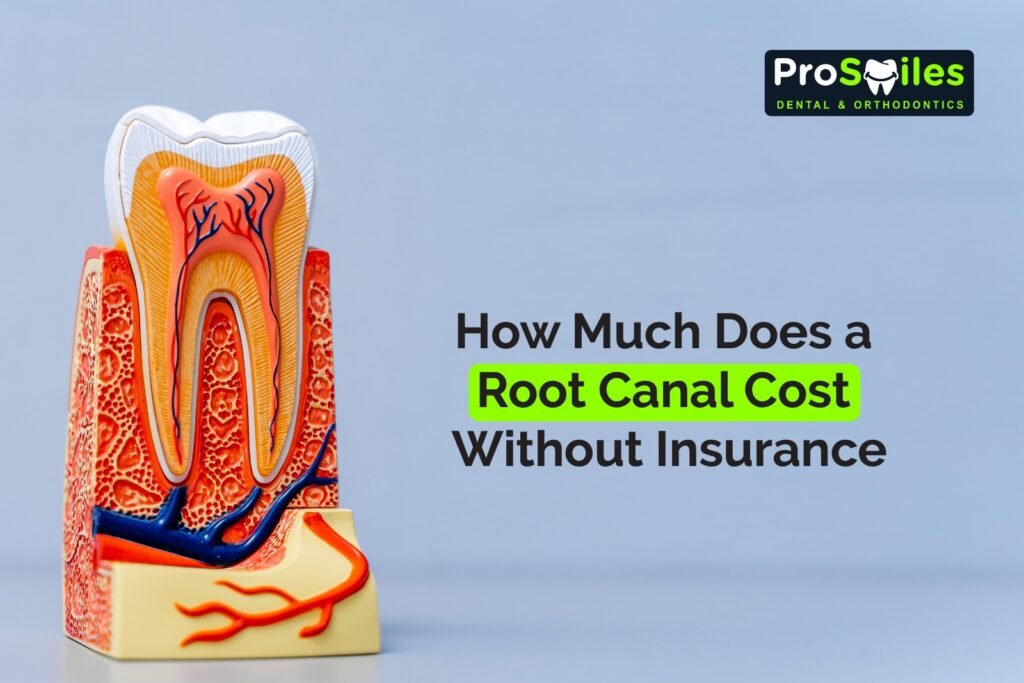
A root canal is a dental procedure designed to save a tooth that’s badly decayed or infected. Instead of removing the entire tooth, your dentist removes the infected pulp inside, cleans and disinfects the canals, and seals them to prevent further damage.
This treatment not only relieves pain but also prevents the infection from spreading — helping you keep your natural tooth for years to come.
Average Root Canal Cost Without Insurance (2025 Estimate)
The cost of a root canal without insurance can vary based on several factors, but here’s an overview of average pricing in Texas, according to recent data from multiple dental sources:
| Tooth Type | Estimated Cost (Texas) |
| Front Teeth (Incisors & Canines) | $425 – $575 |
| Premolars | $515 – $685 |
| Molars | $650 – $860 |
These ranges reflect the base cost for the root canal procedure itself. If you also need a dental crown (which most patients do to protect the treated tooth), that can add $800–$1,500, depending on the material and the dentist’s location.
So, for a molar root canal plus a crown, the total out-of-pocket cost might range between $1,400 and $2,300 without insurance.
Why Root Canal Prices Vary
If you’ve ever compared quotes from different dental offices, you might have noticed that root canal prices can vary widely — even within the same city. Here’s why:
1. Tooth Type and Location
Molars (back teeth) are more complex to treat because they have multiple roots and canals.
Front teeth, on the other hand, have a single canal, which makes them quicker and easier to clean and seal, leading to lower costs.
2. Dentist’s Experience and Technology
Specialists like endodontists often charge more than general dentists because they use advanced tools like digital imaging, microscopes, and rotary instruments to perform the procedure with precision and minimal discomfort.
3. Geographic Location
Costs can also differ based on where you live.
In metropolitan areas like Houston or Dallas, where overhead costs are higher, prices might be slightly above the state average. In smaller Texas towns, they may be more affordable.
4. Severity of the Infection
A tooth that’s severely infected or has been previously treated may require more time, medication, or additional procedures — all of which can raise the final cost.
5. Follow-Up Restorations
After the root canal, most patients need a dental crown to protect the tooth from breaking.
This is not included in the base root canal fee and can significantly impact your overall treatment cost.
How Does Root Canal Cost Compare With Tooth Extraction?
Some people consider skipping the root canal and opting for an extraction instead, thinking it’s cheaper. While it may be less expensive upfront, it often leads to higher costs later.
A tooth extraction can cost $150–$400 without insurance, but replacing that missing tooth with a dental implant or bridge can cost $3,000–$6,000.
In most cases, saving your natural tooth with a root canal is both more cost-effective and better for your long-term oral health.
Ways to Make a Root Canal More Affordable
If you don’t have dental insurance, don’t worry — many practices offer flexible payment options to make treatment accessible. Here are some ways to manage costs:
1. Flexible Payment Plans
Many dental offices partner with financing providers like CareCredit or Sunbit, which allow you to split the total cost into smaller monthly payments, often with little to no interest.
2. In-House Membership Plans
Some clinics offer in-house savings programs for uninsured patients.
For a low annual fee, you can get discounts on major procedures — including root canals — along with free cleanings and exams throughout the year.
3. Dental Schools
If you’re open to being treated by supervised dental students, dental schools can perform root canals at significantly lower rates. The care is closely monitored by licensed professionals, so quality remains high.
4. Compare Quotes
It’s always smart to get a few estimates from local dental offices.
Many offer free consultations or exams, which can help you compare both cost and care before deciding where to proceed.
5. Use Your HSA or FSA
If you have a Health Savings Account (HSA) or Flexible Spending Account (FSA), you can use those pre-tax funds to pay for dental procedures — including root canals. This can save you up to 20–30% in effective costs.
How to Know If You Need a Root Canal
If you’re unsure whether your tooth pain requires a root canal, here are some common warning signs:
- Persistent toothache that worsens when chewing or applying pressure
- Prolonged sensitivity to hot or cold, even after the source is removed
- Darkening or discoloration of the tooth
- Swelling or tenderness in nearby gums
- A pimple-like bump on the gums (abscess)
If you notice any of these symptoms, it’s important to see your dentist as soon as possible.
Delaying treatment can worsen the infection and increase costs later on.
Your Smile Is Worth Saving
A root canal may sound intimidating, but it’s one of the most effective ways to relieve pain and preserve your natural tooth.
Without insurance, you can expect to pay between $425 and $860 in Texas for the root canal itself — and around $1,200 to $2,300 if a crown is needed afterward.
At ProSmiles, we believe quality dental care should be accessible to everyone. We offer transparent pricing, flexible financing, and compassionate care designed to fit your budget and your schedule.
Don’t let fear or cost stop you from saving your smile.
Book your consultation today and take the first step toward a pain-free, healthy mouth.